Showing posts with label Winter. Show all posts

Thursday, November 13, 2025

Winter is coming... Are you ready?

By Cade Shadowlight
     Join the Shadow Tribe: Click here to join our free email list!

Winter 2025/26 is almost here, and with it comes winter's own set of preparedness concerns. Here my annual look at winter preps.

Winter First Aid

Winter has its own set of first aid concerns. I highly recommend you review the article I posted yesterday on Winter First Aid (article link). In it, I discuss The Anatomy of Body Heat (and how to maintain your core temperature), the Symptoms & Treatment of Frostnip and Frostbite, Hypothermia Signs and Treatment, First Aid Courses and a handbook recommendation.  

Prepare Your Vehicle for Winter
  • Inspect your tires and make sure they are in good shape.
  • Don't forget to inspect your spare tire! Make sure you have all the tools you need to change a flat tire. 
  • Inspect your wiper blades. Change them if needed.
  • Make sure the anti-freeze level is appropriate for your location (a local mechanic can help you with that if you don't know).
  • Inspect/test your battery, especially if it is more than four years old.
  • Check all fluids and catch up on any routine maintenance to prevent breakdowns.
Make sure you have an emergency kit in your vehicle, including items such as some food and water, first aid kit, flashlight, extra batteries, extra motor oil, and jumper cables (Amazon link) or battery starter (Amazon link). Warm gloves and head coverings, such as a wool toboggan (Amazon link) or a full Balaclava (Amazon link) are also recommended in cold weather. You should keep a bag with extra socks, gloves and toboggans in your vehicles, just in case.  A warm blanket (Amazon link) also makes a good addition to your vehicle kit, as does a way to recharge your cell your phone (Amazon link) .
 
Suggestion: Many folks get the shortest jumper cables possible in order to save a few bucks. However, its not always possible to park both vehicles that close together. Jumper cables are not that expensive, so go ahead an spend a few extra bucks to get a set that will be long enough to actually be useful. I have a 16-foot set of jumper cables in both my vehicles. 

Other Winter Survival Tips
  • Inspect/clean your chimney and wood stove pipes.
  • If you use firewood, make sure you have enough to last you all winter.
  • Don't let fallen leaves pile up against your home (fire hazard).
  • Clean out gutters after the leaves stop falling (safety issue).
  • Turn off and/or cover outside faucets and watering systems.
  • Make sure your home food and water storage are topped off in case winter storms leave you homebound for a period of time. Same goes for any medications you take.
  • Stock up now on OTC medications for Cold and Flu season.
  • Keep your gas tank topped off. Running out-of-gas is not a good idea in freezing weather.
  • Update your bug-out bag for winter: include dry socks & underwear, gloves, head/neck coverings, poncho, emergency or reflector blanket, and make sure you have plenty of matches, lighters, and/or fire starters. 
  • A cold weather sleeping bag/system (Amazon link) is highly recommended for winter months. 
 
Food needs to be a top priority. Same goes for other types of supplies you use regularly: cleaning supplies, personal hygiene supplies, paper goods, OTC medications, vitamins and supplements, batteries and other disposable items you use a lot of. Aim for at least a 3-month supply of everything, so that if store shelves empty again (remember 2020?) or it simply becomes unsafe to go shopping, you can ride out most problems. 
 
Don't Ignore Your Personal Finances. Paying off your debt and building an emergency fund are hard to do, but few things will make you life easier and more secure than accomplishing those two goals. Check out the Wealth From Chaos website, where we provide you with cutting-edge strategies to build personal and generational wealth, no matter the market’s madness. From basic personal financial management to savvy investing for the flashpoints of change, we deliver actionable insights tailored to a disruptive era. 
 
Prioritize Personal Security. Crime (especially violent) is rising nationwide due to underfunded/understaffed police, soft-on-crime DAs, and millions of illegal immigrants/unvetted refugees. You must protect yourself and family.
 
  • Arm responsibly:
    • Get concealed-carry permit if legal; carry daily.
    • Take realistic self-defense shooting course (stress, moving targets). Ask local gun shop for options.
    • Double or triple ammo stock; supplies are tightening.
  • Non-lethal training for all:
    • Every family/group member (any age) should complete a self-defense course covering physical techniques + avoidance strategies.
    • See my "Shadow Sight" article for details.
  • Holistic security:
    • Harden home: security doors, deadbolts, exterior lighting.
    • Practice: avoid bad areas, situational awareness, common sense.
    • These "boring" measures are often more critical than firearms.
  • Stay safe out there! 

    -------------------------------

    Ad: Survivalist Family: Prepared Americans for a Strong America, by Joe Fox (aka Viking Preparedness). Whether you’re prepping for the apocalypse or just want to be ready for the next blackout, this guide has you covered with real, no-BS tips for beginners and intermediates. Joe Fox breaks it down with the kind of know-how that’ll make you feel like a badass, whether you’re 25 or 55. A must-have for anyone serious about thriving, not just surviving. Grab it now! (RM affiliate link)
    Wednesday, November 12, 2025

    Frostbite & Hypothermia: Winter's Silent Killers (2025/26 Survival Guide)

    By Cade Shadowlight
    (Join the Shadow Tribe: Click here for the free email list!)

    Winter 2025/26 is here, and with it comes winter's own set of first aid concerns. Here my annual review of winter first aid.

    The Anatomy of Body Heat

    A major concern for winter survival is body heat. The human body needs to maintain the core temperature of 98.6° F (37° C). If it gets too low or too high for too long, it could be damaging or even fatal. Most body heat is lost through the head, neck, hands, and wrists, due to those areas being typically not as well-covered as the other areas of the body. If you were naked, you would lose body heat roughly equally throughout your body. The hands and feet, especially the fingers and toes, as well as the ears and nose, are more vulnerable to frost bite due to their greater distance from your body core.

    Wearing warm, dry socks, and appropriate shoes or boots is important during the winter. Warm gloves and head coverings, such as a wool toboggan (Amazon link) or a full Balaclava (Amazon link) are also recommended in cold weather. You should keep a bag with extra socks, gloves and toboggans in your vehicles, just in case.  A warm blanket (Amazon link) also makes a good addition to your vehicle kit.  

    Frostnip/Frostbite Symptoms & Treatment

    Frostnip is a mild form of early frostbite. According to the WebMD website: "When it's cold out, exposed skin may get red or sore. This is called frostnip, and it’s an early warning sign of frostbite. If this happens, find warm shelter quickly."

    According to the Mayo Clinic website: "Frostbite is most common on the fingers, toes, nose, ears, cheeks and chin. Because of skin numbness, you may not realize you have frostbite until someone else points it out."

    The symptoms of frostbite include:
    • Early on, cold skin and a prickly sensation (frostnip)
    • Numbness
    • Skin discoloration: red, white, bluish-white, or grayish-yellow
    • Hard skin and/or waxy-looking skin
    • Joint and muscle stiffness, causing clumsiness and difficulty using hands
    • In severe cases, blistering and peeling of skin after rewarming

    For frostnip, the Mayo Clinic website recommends rewarming the skin and protecting it from further cold. Frostbite requires medical treatment, especially is the frostbite is severe or is accompanied by increasing pain, swelling, discharge, or fever. While awaiting medical care, do not walk on frostbitten feet. Ibuprofen may reduce pain. 

    Important Note: Frostbitten skin is easy to burn, so avoid direct contact with fire, heaters,  lamps, hot water, and heating pads. While outside, you can warm hands by placing them under your arms. Inside, you can soak hands and feet in WARM (not hot) water.

    Hypothermia

    According to the Mayo Clinic website: "Get emergency medical help if you suspect hypothermia, a condition in which your body loses heat faster than it can be produced.  Hypothermia occurs as your body temperature falls below 95 F (35 C)" 

    Symptoms of hypothermia include:
    • Intense shivering
    • Slurred speech
    • Slow, shallow breathing
    • Weak pulse
    • Drowsiness and loss of coordination
    • Confusion and/or memory loss
    • Unconsciousness
    Hypothermia is a very serious condition. Seek medical help immediately if you suspect someone has hypothermia. In the meantime, here are the first aid recommendations from the Mayo Clinic website:
    • Gently move the person out of the cold. If going indoors isn't possible, protect the person from the wind, especially around the neck and head. Insulate the individual from the cold ground.
    • Gently remove wet clothing. Replace wet things with warm, dry coats or blankets.
    • If further warming is needed, do so gradually. For example, apply warm, dry compresses to the center of the body — neck, chest and groin. The CDC says another option is using an electric blanket, if available. If you use hot water bottles or a chemical hot pack, first wrap it in a towel before applying.
    • Offer the person warm, sweet, nonalcoholic drinks.
    • Begin CPR if the person shows no signs of life, such as breathing, coughing or movement.
    • Do not rewarm the person too quickly, such as with a heating lamp or hot bath.
    • Don't attempt to warm the arms and legs. Heating or massaging the limbs of someone in this condition can stress the heart and lungs.
    • Don't give the person alcohol or cigarettes. Alcohol hinders the rewarming process, and tobacco products interfere with circulation that is needed for rewarming.
    Avoid hypothermia by wearing appropriate shoes, socks, clothing, gloves and head/neck coverings for the weather conditions. If you get wet, including heavy sweating, change into dry clothes as soon as possible. Avoid staying outside in very cold weather for too long. Older folks, babies, young children, and folks with certain medical conditions (such as Parkinson's disease, diabetes, and hypothyroidism) are more susceptible to hypothermia. Keep a watchful eye on those folks.
     
    Learn First Aid Before You Need It
     
    Of course, you should learn first aid and CPR before an emergency hits. Everyone, prepper or not, should learn first aid. Please take a good first aid course as soon as possible. Places you may be able to find a course include your local YMCA, fire department, rescue squad, or community college. You also may be able to organize a course through your church, scouting organization, or a local community or civic club. 
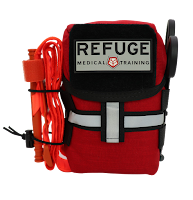
    More advanced courses in first aid and trauma aid can be had through Refuge Training (Affiliate link). 

    Dystopian Survival is affiliated with Refuge Medical & Refuge Training (Affiliate link) — a GREAT source of high quality, American made first aid kits and medical supplies (and training, too!). All members of my Shadow Tribe (that's you!) will automatically receive 10% off at checkout when visiting their store from links on this website.

    In need of a first aid handbook? I recommend the ACEP First Aid Manual 5th Edition: The Step-by-Step Guide for Everyone (Amazon link). It is more up-to-date than the current Red Cross one (2014 vs. 1992).
     
    Stay safe out there!