
Dear Shadow Tribe,
September is National Preparedness Month. In today's post, I take a more detailed look about water storage, both how much and how to.
How Much Water to Store
The general recommendation most often given in preparedness circles for how much water to store is 1 gallon per day, per person. So, a family of four would need 12 gallons of water for a 3-day period (1 gallon X 4 people X 3 days). In my opinion, this is an absolute minimum recommendation, so low-ball that it is bordering on dangerous.
A better recommendation would be 2 gallons of potable water (that is, water safe for drinking, brushing teeth, cleaning wounds, food prep and cooking) per day per person, PLUS additional water for flushing toilets, general household cleaning, and bathing (external only; brush teeth & clean wounds only with potable water). PLUS, don't forget additional water for pets and livestock.
Also, I would recommend storing at a minimum enough water for 2 weeks (14 days). This recommendation would be 112 gallons of potable water for a family of four (2 gallons X 4 people X 14 days), plus additional water for non-potable uses, pets, and livestock. How much additional water will depend on your situation, so use commonsense and your best estimates to come up with your target amount.
NOTE: This is a bare minimum recommendation. More is always better, but water is bulky and takes up a lot of space.
Water for Washing Pots, Pans, and Dishes
Do you need potable water to wash pots, pans, and dishes? There is some disagreement on this issue. The following is my opinion, and what I do.
There is an adage "Germs dry, germs die." I have no problem washing cookware, dishes, and utensils with regular (non-potable) water, as long as they are allowed to dry thoroughly (perhaps in the sun) before their next use. I've never gotten sick from doing this while camping, and know of no one else who has. Many folks agree with me. Others don't. Decide for yourself. If you insist on washing dishes only with potable water, you will have to add more potable water to your storage to account for this use.
Containers to NOT Use for Water Storage
- Milk Jugs - not designed for long-term storage and will eventually leak; difficult to completely wash out the fats & proteins from the milk which may promote bacterial growth; plastic is of a type that may leach chemicals into the water over time.
- Crystal Glass and Antique Glass Containers - the glass may contain lead.
- Bleach Bottles - bleach bottles are treated with a chemical agent that may leach into water over time.
- Ozark Trail 6-gal water jugs - I've written about this before, but the giant X stamped into the sides is a major design flaw that will eventually spring leaks 100% of the time. My experience is with multiple Ozark Trail water jugs bought at different times - ALL eventually leaked along the X.
- Containers that previously held toxic substances - impossible to clean thoroughly enough to be made safe.
Containers to Use for Potable Water Storage
- Water Tanks designed for the purpose of water storage - many types and sizes available on Amazon (Amazon affiliate link).
- Water Containers designed for water storage - I use AquaTainers (Amazon affiliate link), and have never had one leak (they are also BPA-free).
- Food Grade plastic and glass bottles - used bottles with tight-fitting screw-on tops that once contained water, juice, soda, or wine can be cleaned and repurposed for water storage; I use many 1-gallon table wine bottles. Keep see-trough bottles in a dark room or closet, or otherwise covered to protect from light, to prevent growth of bacteria, algae, or mold.
Are Plastic Containers Safe for Water Storage?
Plastic can leach into water over the long-term, but not all plastic leaches equally. Stick to food grade and BPA-free plastics for your long-term storage. Remember this: You will die of dehydration (in days) long before you'll die from plastic toxicity (after years of consumption, if ever). In a true long-term emergency situation, plastic water containers will be the very least of your problems.
How Long Will Water Store?
Non-potable water stores indefinitely, without need for rotation.
Potable water, assuming it is properly stored, also stores indefinitely, without need for rotation. However, potable water will begin to taste "flat" after about six months or so. It is still safe to drink, and the taste can be improved by introducing air into it (think bubbles). Of course, if you notice algae or mold in the water, do not use it without treating first.
Additional Tips
- Clean and thoroughly dry all bottles, tanks, and containers - both used and new - before filling with water for long-term storage.
- If your tap water is already safe for drinking, it should also be safe for long-term storage without additional treatment.
- Unsure of your water? Have it tested first, then treat if necessary.
- Want some extra insurance? Add 2-4 drops of unscented bleach per quart of water.
- Store your long-term water away from direct sunlight and heat, and away from gasoline, kerosene, pesticides, and other chemicals (both to prevent contamination and to prevent possible degradation of plastic containers).

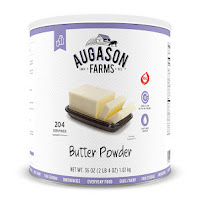
AD: Augason Farms Long-Term Food Storage - This is where I get powdered butter, eggs, cheese, milk, and other long-term foods for my Survival Pantry. Shelf-life up to 20+ years. Good quality, good taste, good value. For my money (literally, since I am a paying customer), Augason Farms is the best long-term foods option.
