Showing posts with label First Aid. Show all posts

Wednesday, November 12, 2025

Frostbite & Hypothermia: Winter's Silent Killers (2025/26 Survival Guide)

By Cade Shadowlight
(Join the Shadow Tribe: Click here for the free email list!)

Winter 2025/26 is here, and with it comes winter's own set of first aid concerns. Here my annual review of winter first aid.

The Anatomy of Body Heat

A major concern for winter survival is body heat. The human body needs to maintain the core temperature of 98.6° F (37° C). If it gets too low or too high for too long, it could be damaging or even fatal. Most body heat is lost through the head, neck, hands, and wrists, due to those areas being typically not as well-covered as the other areas of the body. If you were naked, you would lose body heat roughly equally throughout your body. The hands and feet, especially the fingers and toes, as well as the ears and nose, are more vulnerable to frost bite due to their greater distance from your body core.

Wearing warm, dry socks, and appropriate shoes or boots is important during the winter. Warm gloves and head coverings, such as a wool toboggan (Amazon link) or a full Balaclava (Amazon link) are also recommended in cold weather. You should keep a bag with extra socks, gloves and toboggans in your vehicles, just in case.  A warm blanket (Amazon link) also makes a good addition to your vehicle kit.  

Frostnip/Frostbite Symptoms & Treatment

Frostnip is a mild form of early frostbite. According to the WebMD website: "When it's cold out, exposed skin may get red or sore. This is called frostnip, and it’s an early warning sign of frostbite. If this happens, find warm shelter quickly."

According to the Mayo Clinic website: "Frostbite is most common on the fingers, toes, nose, ears, cheeks and chin. Because of skin numbness, you may not realize you have frostbite until someone else points it out."

The symptoms of frostbite include:
  • Early on, cold skin and a prickly sensation (frostnip)
  • Numbness
  • Skin discoloration: red, white, bluish-white, or grayish-yellow
  • Hard skin and/or waxy-looking skin
  • Joint and muscle stiffness, causing clumsiness and difficulty using hands
  • In severe cases, blistering and peeling of skin after rewarming

For frostnip, the Mayo Clinic website recommends rewarming the skin and protecting it from further cold. Frostbite requires medical treatment, especially is the frostbite is severe or is accompanied by increasing pain, swelling, discharge, or fever. While awaiting medical care, do not walk on frostbitten feet. Ibuprofen may reduce pain. 

Important Note: Frostbitten skin is easy to burn, so avoid direct contact with fire, heaters,  lamps, hot water, and heating pads. While outside, you can warm hands by placing them under your arms. Inside, you can soak hands and feet in WARM (not hot) water.

Hypothermia

According to the Mayo Clinic website: "Get emergency medical help if you suspect hypothermia, a condition in which your body loses heat faster than it can be produced.  Hypothermia occurs as your body temperature falls below 95 F (35 C)" 

Symptoms of hypothermia include:
  • Intense shivering
  • Slurred speech
  • Slow, shallow breathing
  • Weak pulse
  • Drowsiness and loss of coordination
  • Confusion and/or memory loss
  • Unconsciousness
Hypothermia is a very serious condition. Seek medical help immediately if you suspect someone has hypothermia. In the meantime, here are the first aid recommendations from the Mayo Clinic website:
  • Gently move the person out of the cold. If going indoors isn't possible, protect the person from the wind, especially around the neck and head. Insulate the individual from the cold ground.
  • Gently remove wet clothing. Replace wet things with warm, dry coats or blankets.
  • If further warming is needed, do so gradually. For example, apply warm, dry compresses to the center of the body — neck, chest and groin. The CDC says another option is using an electric blanket, if available. If you use hot water bottles or a chemical hot pack, first wrap it in a towel before applying.
  • Offer the person warm, sweet, nonalcoholic drinks.
  • Begin CPR if the person shows no signs of life, such as breathing, coughing or movement.
  • Do not rewarm the person too quickly, such as with a heating lamp or hot bath.
  • Don't attempt to warm the arms and legs. Heating or massaging the limbs of someone in this condition can stress the heart and lungs.
  • Don't give the person alcohol or cigarettes. Alcohol hinders the rewarming process, and tobacco products interfere with circulation that is needed for rewarming.
Avoid hypothermia by wearing appropriate shoes, socks, clothing, gloves and head/neck coverings for the weather conditions. If you get wet, including heavy sweating, change into dry clothes as soon as possible. Avoid staying outside in very cold weather for too long. Older folks, babies, young children, and folks with certain medical conditions (such as Parkinson's disease, diabetes, and hypothyroidism) are more susceptible to hypothermia. Keep a watchful eye on those folks.
 
Learn First Aid Before You Need It
 
Of course, you should learn first aid and CPR before an emergency hits. Everyone, prepper or not, should learn first aid. Please take a good first aid course as soon as possible. Places you may be able to find a course include your local YMCA, fire department, rescue squad, or community college. You also may be able to organize a course through your church, scouting organization, or a local community or civic club. 
More advanced courses in first aid and trauma aid can be had through Refuge Training (Affiliate link). 
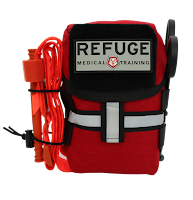
Dystopian Survival is affiliated with Refuge Medical & Refuge Training (Affiliate link) — a GREAT source of high quality, American made first aid kits and medical supplies (and training, too!). All members of my Shadow Tribe (that's you!) will automatically receive 10% off at checkout when visiting their store from links on this website.

In need of a first aid handbook? I recommend the ACEP First Aid Manual 5th Edition: The Step-by-Step Guide for Everyone (Amazon link). It is more up-to-date than the current Red Cross one (2014 vs. 1992).
 
Stay safe out there! 

Sunday, November 9, 2025

Gift the Ultimate Survival Edge: Premium First Aid Kits & Training

By Cade Shadowlight

Searching for a meaningful gift that could save a life? Give the power of preparedness with top-tier first aid kits, essential supplies, and expert training.

This site is an affiliate of Refuge Medical and Refuge Training. As a member of my Shadow Tribe, you'll automatically score 10% off at checkout when shopping through the links on this website! (Affiliate link)

Refuge Medical delivers high-quality, American-made first aid kits and supplies. These are no flimsy imports that fail when you need them most. Ideal gifts for families, preppers, scouts, homesteaders, hunters, hikers, campers, and anyone who values staying alive. These keep blood in the body and breath in the lungs when emergencies strike!

For deeper knowledge, pair with a solid first aid manual:

ACEP First Aid Manual, 5th Edition – Essential for everyone, prepper or not. From the American College of Emergency Physicians, it's far more current (2014) than the outdated American Red Cross version (stuck in 1992). This is the one I own. (Amazon link)

Wednesday, July 23, 2025

Surviving Dystopia: Free and Low-Cost Medical Information

By Cade Shadowlight

Here are some resources that I have found in my own search for health and medical knowledge. It is divided into two sections. The first section is free downloads of medical information in .pdf format. The second section is low-cost information available to the general public. 

Free Medical Information 
(available for download, just click the links)

Where There Is No Doctor: A Village Health Care Handbook - Hesperian's classic manual, Where There Is No Doctor, is arguably the most widely-used health care manual in the world. The manual provides practical, easily understood information on how to diagnose, treat, and prevent common diseases. Special attention is focused on nutrition, infection and disease prevention, and diagnostic techniques as primary ways to prevent and treat health problems.

Where There Is No Dentist - The companion to Where There Is No Doctor features information on maintaining tooth and gum health, and treating dental problems, including filling cavities and extracting teeth, when there is no professional dentist available. 

Basic Physical Health with Limited Resources - The Church of Jesus Christ of Latter Day Saints (LDS) have taught/required preparedness and self-reliance of their members for generations, and have accumulated much practical knowledge on the subject. In addition to the well-known LDS Preparedness Manual, they have also published this 76-page guide to Basic Physical Health with Limited Resources. This book gives information covering Disease Prevention, Cleanliness and Sanitation, Family Food Production, and Basic Family Medical Care, even when resources are limited because of poverty, war, or natural disasters. 

US Military Medical and First Aid Manuals - There are more than 20 US Military Medical and First Aid Manuals available for FREE download (and no email required) in .pdf format on the Federation of American Scientists website. Just click the link to go to the webpage for those manuals, and download the ones you want or might need. Or just download all of them, since they are free.

Where There Is No Vet - Part of the same series as Where There Is No Doctor and Where There Is No Dentist, this book is more than first aid for pets and livestock. It covers a wide range of topics to help keep your animals healthy. Both traditional remedies and modern medicine are covered, and special emphasis is given to preventing disease and keeping your animals healthy. Includes advice on the care, feeding, and handling of animals. Just click the link to go to the download page on the Livestocking.net website. 


Low-Cost Medical Information

Please take a basic first aid & CPR course before an emergency hits! These basic courses are typically free or low-cost. Places you may be able to find a basic first aid course include your local YMCA, fire department, rescue squad, or community college. You also may be able to organize a course through your church, scouting organization, or a local community/civic club. 

[Better and more advanced first aid courses, including trauma aid, can be obtained through Refuge Medical & Refuge Training (Affiliate link).]

I have all of the following books on my Survivalist Bookshelf. There are no blind recommendations. These are the books I use. 

ACEP First Aid Manual, 5th Edition - Everyone, prepper or not, should learn first aid. This first aid manual of the American College of Emergency Physicians (ACEP) is much more up-to-date (2014) than the American Red Cross manual, which hasn't been updated since 1992. 

The Survival Medicine Handbook, 4th Edition - In my opinion, this is THE essential guide for when medical help is NOT on the way (which happens also to be its subtitle). Written by Dr. Joseph Alton, MD, and Amy Alton, APRN, this massive handbook (close to 700 pages) is a detailed guide for those who want to be medically prepared for any disaster or austere setting where doctors, nurses, or paramedics are not available. 

Alton's Antibiotics and Infectious Disease, subtitled The Layman's Guide to Available Antibacterials in Austere Settings, is also by the husband-wife team of Dr. Joseph Alton, MD, and Amy Alton, APRN. This book is a simplified guide to using antibacterial and antifungal veterinary medications (such as fish antibiotics) in disaster, survival, and other austere settings where modern medicine is non-existent.  

Foods That Harm, Foods That Heal, is a popular health advice book from the editors of Reader's Digest, now in its Third Edition. This book takes the approach of connecting the foods we eat to the ailments that they cause or worsen, or that they help heal. This food-health connection is extremely important, and is a natural way to deal with our health issues. 

Herbal Medic: A Green Beret's Guide to Emergency Medical Preparedness and Natural First Aid - With a focus on herbal medicine and first-aid essentials, former Green Beret medic and clinical herbalist Sam Coffman presents this comprehensive home reference on medical emergency preparedness for times when professional medical care is unavailable.

Wilderness & Travel Medicine: A Comprehensive Guide, 4th Edition - A really good pocket-sized guide. Perfect for your bug-out bag, or to toss in a suitcase when you are traveling. 


Diabetes Books

I am a Type II Diabetic. These are the three main books I use in dealing with my diabetes, two of which were recommended by my doctor. One is actually a cookbook.

Of all the books I've read so far, the best and most useful is 60 Ways to Lower Your Blood Sugar by Dennis Pollock. Pollock's book is an aggressive plan to control your blood sugar by bringing together the best of traditional and alternative medicine. What I appreciate about Pollock's approach is that it is based on solid science, even the "alternative" aspects, and is not some hippy-dippy book that rejects science (avoid those). Also, his ideas are easy to follow.

When I was first diagnosed, my doctor recommended the book Life Without Bread by Dr. Christian B. Allan, and Dr. Wolfgang Lutz. This book presents a low-carbohydrate diet (but one not as severe as the Atkin's Diet) as the best healthy diet for everyone, especially people dealing with high blood sugar. Right now, based on my own experiences and everything else I've read, I think they are right about their low-carbohydrate diet.

My doctor also suggested I try the cookbook Paleo Comfort Foods. Since the Paleo Diet avoids both grains and potatoes, most of the recipes in this cookbook are diabetic-friendly, although you may to substitute stevia for regular sugar in a few of them. I actually use this cookbook often.  (My doctor has told me that he and his family follow a "mostly Paleo" diet.)

Legal Disclaimer: I am NOT a medical professional. I am NOT diagnosing or treating any medical condition. This article only points to health and medical reference materials that are available to the general public.

------------------------
Refuge Medical & Refuge Training (affiliate link) - American made First Aid Kits that save the day + Training to back it up. Auto-discount at checkout with my affiliate link.

Friday, June 27, 2025

Crisis Management 101: Your Guide to Surviving Emergencies

By Cade Shadowlight
     Become a Dystopian: Click here to join the free email list!

When disaster strikes, chaos reigns. Whether it’s a natural catastrophe, societal collapse, or personal emergency, your ability to stay calm and act decisively can mean the difference between survival and catastrophe. Here’s your streamlined guide to navigating emergencies with clear priorities and actionable steps.

The STOP Method: Your Crisis Response Framework
When the world turns upside down, follow the STOP method to regain control:

  • Stop. Don’t panic. Take deep breaths, sit if you need to, and ground yourself. Panic clouds judgment and escalates danger.
  • Think. Assess the situation. Are you in immediate peril (e.g., a burning building) or facing a longer-term crisis (e.g., economic meltdown)? Rational decisions are your lifeline.
  • Observe. Survey your surroundings. Identify immediate, near-term, and long-term threats. Take stock of resources: skills, supplies, tools, allies, and funds.
  • Plan. Formulate a clear plan, communicate it to your group, and stick to it. Adjust only when circumstances demand, as frequent changes breed confusion.
Time Factor: You might have seconds, hours, or days to execute STOP. Work with what you’ve got. Pre-planning scenarios can sharpen your instincts.

Pro Tip: Train your family or group in the STOP method. Run drills for different emergencies to build muscle memory.

Emergency Priorities: The Survival Hierarchy
In any crisis, prioritize these essentials in order:

  1. Safety First. Get yourself and others out of immediate danger. Escape a burning house, flee a riot zone, or relocate during political/economic instability.
  2. Medical Needs. Address life-threatening injuries in this order (Critical: Take a good first aid and CPR course now. Knowledge saves lives):
    • Ensure breathing.
    • Stop severe bleeding.
    • Stabilize neck/back injuries.
    • Treat shock, hypothermia, hyperthermia, or cardiac issues.
    • Address dehydration.
    • Immobilize fractures.
    • Handle minor injuries.
  1. Shelter. Protect against the elements with a building, tent, or clothing like rain gear or blankets.
  2. Water. Secure clean water — it’s non-negotiable for survival.
  3. Food. Least urgent. You can survive weeks without food, but it’s a long-term need.
Prepare and Practice
Preparation is your edge. Regularly drill scenarios — fire, civil unrest, power outages — to hardwire responses. Like athletes running plays or militaries staging war games, practice builds confidence and clarity under pressure.

Resource Recommendations:

ACEP First Aid Manual, 5th Edition 
A modern, comprehensive guide to first aid — essential for every survivalist and every family. Available on Amazon. Unlike outdated alternatives, this manual equips you with current techniques to handle emergencies effectively.

This website is affiliated with Refuge Medical and Refuge Training. My Shadow Tribe (that's you!) will automatically receive 10% off at checkout when visiting their store from links on this website. Their first aid kits, tourniquets, and medical supplies are high-quality, made-in-America products. Helps keep blood in the body and breath in the lungs during life's emergencies. Click here to be sent to their webstore and receive 10% off at checkout.