Showing posts with label Review. Show all posts

Wednesday, November 26, 2025

Survival Gear Fail: Why Wire Saws Suck and Better Alternatives

By Cade Shadowlight

In the world of survival prep, compact tools can make or break your kit. The wire saw, often called a commando saw, seems like a no-brainer for bug-out bags or tiny survival tins like Altoids cans. It's lightweight, rolls up small, and promises to slice through branches effortlessly. I carried one for years without testing it (big mistake! always verify your gear before SHTF).

Inspired by a survival show, where the host's wire saw failed on the first pull, I decided to try mine. The rings held, but after cutting just two skinny pine branches (about 1/3 inch each), the wire kinked, twisted, and bent beyond repair. It couldn't even finish a third branch. Total junk. Into the trash it went.

But a portable saw is still essential for building shelters, gathering firewood, or processing game. So, I hunted for better options and found two winners.

1. Bahco Laplander Folding Saw (Amazon link)

This beast is too bulky for a tin kit but fits perfectly in a bug-out bag at under half a pound. I keep mine in my BOB but pull it out for homestead tasks (and always return it). 

My Laplander Folding Saw

I've used it to cut branches up to 3 inches thick with ease, and it could handle more with some elbow grease. Designed for wood, plastic, and bone, its bi-directional teeth cut on both push and pull strokes. It's one of my most versatile tools; I even bought a backup.


2. Survival Pocket Chain Saw (Amazon link)

This is a chainsaw blade with nylon hand straps, stored in a belt pouch. Again, not tin-sized, but lightweight (under half a pound) for bags, vehicles, or even EDC on your belt.

It delivers real power. I've felled small trees with it (see my photos below), though it's a serious workout. Great for building stamina, but wear gloves to avoid blisters!
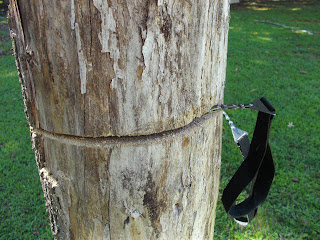
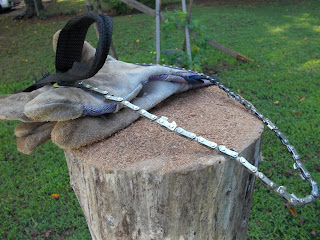
 Key Takeaway: Field-test every piece of gear. What looks good on paper (or in ads) might flop in the field. Don't get caught unprepared.

--------------------

*** Liked this article? Never miss out on future articles by following Dystopian Survival. 



Monday, July 21, 2025

Review: Survivalist Family—Prepared Americans for a Strong America

By Cade Shadowlight

I've owned and recommended Survivalist Family—Prepared Americans for a Strong America for years, but I've never written an actual review until now. It is high time I corrected that oversight, because this book is the absolute best preparedness and survival guide on a market that seems saturated with such guides. 

About the Author

Before I review the book itself, I want to talk about the author, because it is Joe Fox (aka Viking Preparedness) that makes this book so outstanding. His credentials for writing a survivalist book is impressive: 
  • Grew up internationally with his family
  • 20-year military career (Green Beret, Pentagon)
  • "Unspecified" 3-letter agency post-military career
  • Pastor (sermons/teachings on YouTube)
  • Volunteer fire fighter, Boy Scout leader
  • Over a decade living an off-grid "neo-pioneering" life
  • Over 15 years making survivalist videos (YouTube channel, Patreon channel)
His knowledge, drawn from real-world experience, is as far from theoretical as it gets.

About the Book

Survivalist Family is 195 pages of practical information. It covers the basics of preparedness and goes beyond to include information and advice not readily found elsewhere. It is a great guide to both beginner and intermediate preparedness and survival.

The sections in this book include:
  • Getting Started (covers the basics + how to get a reluctant spouse on board)
  • "It's for the Children" (children and preparedness + the skill sets they need)
  • Putting It All Together (budgeting, team building, organizing your home for survival, bugging out)
  • Taking It To The Next Level (thoughts and advice on food & water; light, heat & fuel; medical, sanitation and hygiene; guns & ammo; tools; communication)
  • Appendices (useful and realistic lists, including a family communications plan)
Fox writes in a way that is understandable, relatable, and complete without unnecessary fluff. He is able to put a lot of information into a book that is readable in only a few sittings. Survivalist Family is my top recommendation for a general preparedness and survival book. Get it now, and start your family on the road to surviving whatever the future may bring.

Survivalist Family is currently available from Refuge Medical for only $20 through my affiliate link. You'll even get an extra discount at checkout on it and all other Refuge Medical products using any of my links. 

Monday, July 14, 2025

Review: Plant Science For Gardeners, by Robert Pavlis

By Cade Shadowlight

I recently became aware of Robert Pavlis and his book, 
Plant Science for Gardeners. I really like it and found it to be an understandable and useful read. I want to make my readers aware of this excellent resource for better, more productive gardening. If you are interested in his award-winning book, you can purchase it at Amazon using my affiliate link: https://t.co/4YMVftj94P. Remember, making purchases through my affiliate links helps support this website at no extra cost to you, So, thank you! 

The book is entitled Plant Science for Gardeners: Essentials for Growing Better Plants. It is exactly what its title implies—a book written by a gardener for gardeners that explains in understandable terms the latest plant and soil science that will help gardener's grow better and more productive plants. 

From the Amazon description:

A little plant science grows a long way

Plant Science for Gardeners empowers growers to analyze common problems, find solutions, and make better decisions in the garden for optimal plant health and productivity.

Most gardeners learn by accumulating rules―water once a week, never dry out snowdrop bulbs, prune lilacs after flowering, plant garlic in October―the list is endless.

Rules take years to learn and yet leave you floundering when the unexpected strikes and plants look unhealthy, produce poorly, or die.

There is a better way.

By understanding the basic biology of how plants grow, you can become a thinking gardener with the confidence to problem solve for optimized plant health and productivity. Learn the science and ditch the rules! Coverage includes:

    • The biology of roots, stems, leaves, and flowers
    • Understanding how plants function as whole organisms
    • The role of nutrients and inputs
    • Vegetables, flowers, grasses, and trees and shrubs
    • Propagation and genetics
    • Sidebars that explode common gardening myths
    • Tips for evaluating plant problems and finding solutions.


Whether you're a home gardener, micro-farmer, market gardener, or homesteader, this entertaining and accessible guide shortens the learning curve and gives you the knowledge to succeed no matter where you live.

The Amazon link for this book is https://t.co/4YMVftj94P

Monday, June 30, 2025

Review: The Old Farmer's Almanac Vegetable Gardener’s Handbook

By Cade Shadowlight

I picked up a copy of Vegetable Gardener’s Handbook by Old Farmer’s Almanac last year, and it quickly became my favorite gardening book. Currently only $12.79 on Amazon (about 35% off its regular price of $19.95), this 200+ page guide is packed with gardening information for both beginners and experts. It’s filled with detailed articles, pictures, and step-by-step instructions. It even includes journal pages to record your gardening activities, such as soil tests and seed-starting records. I highly recommend this book to those new to gardening and even to those of us who are seasoned growers.
The book covers essential topics, including:
  • Getting Started
  • Tools for Success
  • Above-Ground Gardening
  • Container Gardening
  • Indoor Gardening
  • The Dig Less, Mulch More Method
  • Facts About Fertilizers
  • How to Fight Disease and Pests
  • Seed Saving
  • Crop Rotation
  • Soil and Composting (multiple articles)
It also features encyclopedia-like entries on 32 vegetables, each with 2–5 pages of detailed information, planting instructions, and recommended varieties. Vegetables include:
  • Root Crops: Beets, carrots, parsnips, potatoes, radishes, rutabaga, turnips
  • Leafy Greens: Kale, lettuce, spinach, Swiss chard
  • Brassicas: Broccoli, Brussels sprouts, cabbage, cauliflower, kohlrabi
  • Legumes: Beans, edamame, peas
  • Nightshades: Eggplant, bell peppers, tomatoes
  • Alliums: Garlic, onions
  • Others: Asparagus, celery, corn, cucumbers, okra, pumpkins, summer and winter squash, sweet potatoes
The Vegetable Gardener’s Handbook not only equips you with practical gardening knowledge but also empowers you to take control of your food supply in uncertain times. Growing vegetables offers everyone the chance to grow your own food, get exercise and fresh air, and reap the rewards of working with nature. In an era of uncertain supply lines and high inflation, gardening provides an important sense of security.

Grab this book to start building your food security today:  https://amzn.to/3ubG8lC