Showing posts with label Gardening. Show all posts

Sunday, July 19, 2026

Grow Fresh Herbs Indoors! Natural Fragrance & Self-Reliant Flavor

Dear Shadow Tribe,
 
In a world pushing dependency and synthetic everything, small acts of independence matter. One of the simplest? Grow basil (or other herbs) right on your windowsill, or under a grow light.

Why Basil Works Well Indoors
  • Strong aroma: It has a sweet, peppery, clove-like scent that fills the room nicely when you brush the leaves.
  • Easy and productive: Fast-growing, you can harvest leaves continuously for cooking, teas, or just fragrance.
  • Compact: Fits nicely on a sunny windowsill or under a grow light in a small pot.
  • Versatile: Great for Italian dishes, pestos, salads, or even homemade air fresheners.
 
Photo by Karolina Kołodziejczak on Unsplash

 
Quick Growing Tips for Success Indoors
  • Light: Needs 6–8 hours of bright, direct sunlight daily (south-facing window is ideal). If natural light is limited, use a full-spectrum LED grow light (Amazon link).
  • Pot & Soil: Use an 8 inch pot with good drainage and well-draining potting mix (Amazon link), avoid heavy garden soil.
  • Watering: Keep soil moist but not soggy. Water when the top inch feels dry. 
  • Temperature: Prefers 70–85°F during the day; it tolerates average room temps but dislikes cold drafts.
  • Harvesting: Pinch off leaves or stem tips regularly to encourage bushier growth. It loves being used!
 
Other Aromatic Options
  • Mint (super easy, vigorous, and very fragrant, but keep it in its own pot as it spreads aggressively).
  • Rosemary (pine-like scent, drought-tolerant once established, woody and attractive).
  • Thyme or Oregano (compact, flavorful, and lower-maintenance).
 
Basil is a solid starting point for most people. Start with seeds or a small plant from a nursery for quicker results. Perfect for apartments and townhouses, it is low-cost resilience that smells like victory. 
 
What is your experience with growing herbs indoors?  Share in the comments or join the Shadow Tribe for free by clicking here
 
Between Shadows and Light, 
   Cade Shadowlight ☠ 

P.S. Here is my go to for all things life saving: Refuge Medical & Refuge Training (affiliate link). High quality, American-made first aid kits and medical supplies (training, too!). A 10% discount will automatically be applied at checkout using my links. 
 
If this article inspired or helped you, then please buy me a coffee so I can keep exposing the things they don’t want you to know → https://buymeacoffee.com/cadeshadowlight 


Sunday, November 23, 2025

The Surprising History of Victory Gardens

By Cade Shadowlight

There is a surprising history to Victory Gardens, with a couple of important lessons to be learned. Let me explain.
 
During World War I, the United States and Canada had to provide food not only for their populations, but for war-ravaged Europe as well. As more food stuffs were shipped overseas, availability of food in North America decreased and prices increased on such staples as milk, butter, eggs and coffee. Meatless and wheatless days were encouraged by government officials to try to cut consumption. Community gardens began to spring up everywhere as people started growing their own food.

In 1917, the National War Garden Commission was founded to "arouse the patriots of America to the importance of putting all idle land to work, to teach them how to do it, and to educate them to conserve by canning and drying all food that they could not use while fresh" (Charles Pack, The War Garden Victorious, copyright 1919, page10). The Commission used posters, slogans, cartoons, press releases and pamphlets to educate people.

After the end of World War I, the idea of victory gardens went out-of-style. But the idea made a comeback during the Great Depression with Depression Relief Gardens. Early during the Depression, these gardens were promoted by local governments and were a bureaucratic nightmare, with squabbles and infighting over where to put the gardens, what to grow and how much control individuals should have over their plots in the community gardens. By 1933, however, local governments had relinquished control of these community gardens to private organizations, such as the Family Welfare Society, which did a remarkably better job organizing them. 

After a few years of private s
uccess, the federal government eventually took control, changed the names from "relief gardens" to "welfare gardens" and greatly restricted eligibility for participation. By the end of the 1930s the Depression era gardening movement was dead.

Then came World War II, and the Victory Garden movement was back. But the Victory Movement was about more than just growing food, though the gardens did continue to be a big part. Conservation of resources was also promoted. Scrap metal drives were commonplace, as were rubber drives. Salvaged kitchen fat was collected and used to produce glycerin, which was used in the production of drugs and explosives. War bonds were sold. Societal norms were changed as women were encouraged to go to work in order to fill jobs left vacant by the men who went off to at war. Rosie the Riveter (poster on the left) became a symbol to rally around.

War time efforts of the common folks were promoted by posters, slogans, pamphlets, billboards, cartoons, comics, TV and films. Whatever it took to get the word out and promote gardening and conservation efforts was done. A massive change in people's behavior took place. It is estimated that by 1943, 40% of America's vegetables were grown in over twenty million victory gardens.

The year 1946, after the end of World War II, saw a sharp decline in gardens planted by average people. Home gardens eventually became little more than a hobby pursued by only a small percentage of Americans.

The Arab oil embargo, high inflation and economic problems in the 1970s resulted in a renewed interest in gardening. 1975 saw the creation of the television gardening show entitled The Victory Garden. During the economic boom of the 1980s, interest in home gardens once again waned. 

Lessons To Be Learned

This ebb and flow in interest in gardening and self-reliance depending on good times or bad times continues to this day. Interest increases during bad times as people struggle to survive, and learn they cannot depend on the "system" or even government to help them. Yet as soon as good times come around again, folks quickly forget those lessons and go back to dependence on the system and government. 

Another lesson to be learned is found in how poor a job government did in managing victory gardens, and how much better private organizations and individuals did when government turned it over to them. Self-reliance cannot be imposed or managed by government. In fact, government control is the opposite of self-reliance. 
 
-----------------------------------
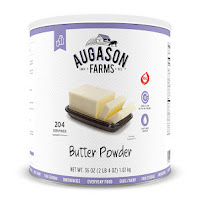
AD:  Augason Farms Long-Term Food Storage - This is where I get powdered butter, eggs, cheese, milk, and other long-term foods for my Survival Pantry. Shelf-life up to 20+ years. Good quality, good taste, good value. For my money (literally, since I am a paying customer), Augason Farms is the best long-term foods option.


Wednesday, October 29, 2025

1800s Backcountry Homesteads: Most Important Crop/Food Staple

By Cade Shadowlight

Picture yourself on a remote 1850s homestead, miles from the nearest trading post. One crop failure could spell starvation for your family. What crop would you bet your survival on?

Not wheat. Not corn. Not even beans.

Root Crops!

The undisputed king of the 1800s backcountry diet? Root crops: turnips, rutabagas, beets, parsnips, carrots, potatoes, onions, and lesser-known gems like black salsify (the "oyster plant" with its seafood-like flavor, more common in the 1800s). 

Here's why roots reigned supreme:

  • Very filling (high carb, high fiber, prevents hunger)
  • Reliable, easy-to-grow (crop failures can mean starvation and even death to homesteaders in the 1800s)
  • Highly productive (insane yields fed families for months)
  • Nutrition packed (vitamins A, C, potassium, antioxidants) 
  • Simple, easy food storage methods (root cellars, drying, and pickling) 
  • Endless prep options (baked, boiled, mashed, stews, soups, fried) 
Black Salsify roots

The #2 Heavy Hitter: Winter Squash

Squashes, particularly winter squashes with their thicker skins, are probably the second most important staple on the 1800s homestead. The thick skins of winter squashes mean that they store very well in root cellars. Summer squashes, with their thinner skins, do not store well in root cellars, but can be pickled for long-term storage.

Reliable Runners-Up 

Beans and peas are another popular 1800s homestead staple because they are a relatively reliable crop, highly productive, and easily dried for long-term storage. Seed-saving, important on the backcountry homestead, is also very easy with beans and peas (as well as squashes) which is another factor in their favor. 

Of course, a typical 1800s homestead also grows a wide variety of other crops, such as cabbages, tomatoes, and corn. However, when push came to shove in an 1800s winter, root crops were the difference between thriving and dying. 

What root crops do you grow in your garden? 

----------------------
Ad: Root Cellaring: Natural Cold Storage of Fruits & Vegetables (Amazon link) - Discover how easy you can turn extra space in your basement, garage, or even your closet into your very own root cellar. Stretch the resources of your backyard garden further than ever before, no canning required! 


Wednesday, October 22, 2025

Plants That Supercharge Your Soil for Survival Gardening

By Cade Shadolwight

Healthy, fertile soil is the backbone of any thriving garden, especially in a forest garden designed for resilience. Certain plants can naturally enhance soil quality, making them essential for survival gardening. These plants fall into three key categories: dynamic accumulators, nitrogen fixers, and hyperaccumulators.

Dynamic Accumulators, Nitrogen Fixers, and Hyperaccumulators

Dynamic accumulators have deep roots that mine minerals from subsoil, making nutrients available to shallow-rooted plants. Nitrogen fixers, through a mutualistic relationship with rhizobial bacteria, enrich soil with nitrogen, a vital nutrient for plant growth. Both types are ideal for companion planting in forest gardens or as ground cover and "green manure" to boost soil health.

Dynamic accumulators and nitrogen fixers can be grown near other plants (companion planting), which is why they work so well in forest gardening, or as a form of ground cover crop and "green manure." Your choice of specific plants to use will depend upon your particular location and climate, of course, but partial lists of both appear below.

Your choice of plants depends on your climate and location, but below are partial lists of dynamic accumulators and nitrogen fixers. Additionally, hyperaccumulators detoxify contaminated soils by absorbing heavy metals like lead, mercury, arsenic, and aluminum through a process called phytoremediation. For a detailed phytoremediation table matching toxic elements to specific hyperaccumulators, visit Wikipedia’s phytoremediation page.

Partial List of Dynamic Accumulators 
  • Black Locust - Robinia pseudoacacia - Canopy 
  • Dogwoods - Cornus spp. - Understory 
  • Arrowroot - Maranta arundinacea - Herbaceous Layer 
  • Borage - Borago officinalis - Herbaceous Layer 
  • Comfrey - Symphytum uplandicum - Herbaceous Layer 
  • Dandelion - Taraxacum spp. - Herbaceous Layer
  • Indian Grass - Sorghastrum nutans - Herbaceous Layer 
  • Lemon Balm - Melissa officinalis - Herbaceous Layer 
  • Mint - Mentha sp. - Herbaceous Layer 
  • Stinging Nettle - Urtica dioica - Herbaceous Layer
  • Switchgrass - Panicum virgatum - Herbaceous Layer
  • Yarrow - Achillea millefolium - Herbaceous Layer
  • Plantains - Musa spp.- Herbaceous Layer
  • Alfalfa - Medicago sativa - Herbaceous Layer

 Partial List of Nitrogen Fixers 

  • Alder tree and shrubs - Alnus spp. - Canopy or Understory 
  • Black Locust Tree - Robinia pseudoacacia - Canopy 
  • Kentucky Coffee Tree - Gymnocladus Dioicus - Canopy
  • Russian Olive Tree - Elaeagnus angustifolia - Understory 
  • Bayberry - Myrica spp. - Understory 
  • Acacias - Acacia spp. - Canopy or Understory
  • Most Beans - Fabaceae family* - Herbaceous Layer
  • Peanuts - Arachis hypogaea - Herbaceous Layer
  • Vetches - Vicia sp. - Herbaceous Layer Perennial 
  • Clover - Trifolium sp. - Herbaceous Layer 
  • False Indigo - Baptisia australis - Herbaceous Layer 
  • Scarlet Runner Bean - Phaseolus coccineus - Vine 
  • Wisteria - Wisteria floribunda - Vine

*Note: The legume family (Fabaceae), including beans, clover, alfalfa, buckwheat, and peanuts, is among the most accessible and effective nitrogen fixers.

Resources

Plants For A Future - Informative website and database listing over 8,000 edible, medicinal, and otherwise useful plants.

Building Soils for Better Crops - This book is a one-of-a-kind, practical guide to ecological soil management. It provides step-by-step information on soil-improving practices as well as in-depth background, from what soil is to the importance of organic matter. Availble on Amazon.

Dystopian Survival's Free Email List - Get expert tips and articles to thrive in today's world. Discover essential skills, from homesteading and gardening to the strategies and tools you need for modern survival. Sign up now!

----------------------------

Gear up with top-tier, American-made first aid kits and medical supplies from Refuge Medical! Plus, level up your skills with their expert training. Use our link for an automatic 10% off at checkout. Be prepared, stay safe!


Monday, July 14, 2025

Review: Plant Science For Gardeners, by Robert Pavlis

By Cade Shadowlight

I recently became aware of Robert Pavlis and his book, 
Plant Science for Gardeners. I really like it and found it to be an understandable and useful read. I want to make my readers aware of this excellent resource for better, more productive gardening. If you are interested in his award-winning book, you can purchase it at Amazon using my affiliate link: https://t.co/4YMVftj94P. Remember, making purchases through my affiliate links helps support this website at no extra cost to you, So, thank you! 

The book is entitled Plant Science for Gardeners: Essentials for Growing Better Plants. It is exactly what its title impliesa book written by a gardener for gardeners that explains in understandable terms the latest plant and soil science that will help gardener's grow better and more productive plants. 

From the Amazon description:

A little plant science grows a long way

Plant Science for Gardeners empowers growers to analyze common problems, find solutions, and make better decisions in the garden for optimal plant health and productivity.

Most gardeners learn by accumulating rules―water once a week, never dry out snowdrop bulbs, prune lilacs after flowering, plant garlic in October―the list is endless.

Rules take years to learn and yet leave you floundering when the unexpected strikes and plants look unhealthy, produce poorly, or die.

There is a better way.

By understanding the basic biology of how plants grow, you can become a thinking gardener with the confidence to problem solve for optimized plant health and productivity. Learn the science and ditch the rules! Coverage includes:

    • The biology of roots, stems, leaves, and flowers
    • Understanding how plants function as whole organisms
    • The role of nutrients and inputs
    • Vegetables, flowers, grasses, and trees and shrubs
    • Propagation and genetics
    • Sidebars that explode common gardening myths
    • Tips for evaluating plant problems and finding solutions.


Whether you're a home gardener, micro-farmer, market gardener, or homesteader, this entertaining and accessible guide shortens the learning curve and gives you the knowledge to succeed no matter where you live.

The Amazon link for this book is https://t.co/4YMVftj94P

Monday, June 30, 2025

Review: The Old Farmer's Almanac Vegetable Gardener’s Handbook

By Cade Shadowlight

I picked up a copy of Vegetable Gardener’s Handbook by Old Farmer’s Almanac last year, and it quickly became my favorite gardening book. Currently only $12.79 on Amazon (about 35% off its regular price of $19.95), this 200+ page guide is packed with gardening information for both beginners and experts. It’s filled with detailed articles, pictures, and step-by-step instructions. It even includes journal pages to record your gardening activities, such as soil tests and seed-starting records. I highly recommend this book to those new to gardening and even to those of us who are seasoned growers.
The book covers essential topics, including:
  • Getting Started
  • Tools for Success
  • Above-Ground Gardening
  • Container Gardening
  • Indoor Gardening
  • The Dig Less, Mulch More Method
  • Facts About Fertilizers
  • How to Fight Disease and Pests
  • Seed Saving
  • Crop Rotation
  • Soil and Composting (multiple articles)
It also features encyclopedia-like entries on 32 vegetables, each with 2–5 pages of detailed information, planting instructions, and recommended varieties. Vegetables include:
  • Root Crops: Beets, carrots, parsnips, potatoes, radishes, rutabaga, turnips
  • Leafy Greens: Kale, lettuce, spinach, Swiss chard
  • Brassicas: Broccoli, Brussels sprouts, cabbage, cauliflower, kohlrabi
  • Legumes: Beans, edamame, peas
  • Nightshades: Eggplant, bell peppers, tomatoes
  • Alliums: Garlic, onions
  • Others: Asparagus, celery, corn, cucumbers, okra, pumpkins, summer and winter squash, sweet potatoes
The Vegetable Gardener’s Handbook not only equips you with practical gardening knowledge but also empowers you to take control of your food supply in uncertain times. Growing vegetables offers everyone the chance to grow your own food, get exercise and fresh air, and reap the rewards of working with nature. In an era of uncertain supply lines and high inflation, gardening provides an important sense of security.

Grab this book to start building your food security today:  https://amzn.to/3ubG8lC