Thursday, November 27, 2025

Top 9 Prepper & Survival Books to Gift This Christmas

By Cade Shadowlight

The holiday season is the perfect time to give gifts that actually matter, gifts that can save lives and build resilience. Whether your loved ones are brand-new to prepping or already seasoned, these timeless books belong on every preparedness bookshelf. They also make outstanding Christmas presents for family, friends, neighbors, or co-workers who you’d like to gently “red-pill” without overwhelming them.

Here are my personal top picks (updated for 2025), including one classic on personal finance that every prepper needs, because being broke is its own kind of disaster.

Survivalist Family

Survivalist Family: Prepared Americans for a Strong America by Pastor Joe Fox (Viking Preparedness).
Still my #1 recommendation for beginners and families. Clear, faith-friendly, no-nonsense guide to short- and long-term preparedness. Highly recommended!


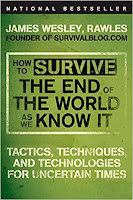
How to Survive TEOTWAWKI

How to Survive the End of the World as We Know It by James Wesley, Rawles.
The modern prepper classic. Covers gear, food, security, retreat planning and more. Still essential reading in 2025.


Modern Survival Manual

The Modern Survival Manual: Surviving the Economic Collapse by Fernando “FerFAL” Aguirre
Real-world lessons from Argentina’s 2001 collapse. If you want to know what an actual economic SHTF looks like on the street, this is it.


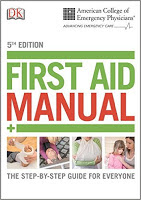
ACEP First Aid Manual

ACEP First Aid Manual, 5th Edition.
Current, authoritative first-aid knowledge from the American College of Emergency Physicians. Every household needs this, prepper or not.


Survival Medicine Handbook

The Survival Medicine Handbook by Dr. Joe & Amy Alton. 
The go-to medical reference when 911 doesn’t answer. Pair it with the ACEP manual above.


SAS Survival Handbook

SAS Survival Handbook, Third Edition by John “Lofty” Wiseman. 
The ultimate all-environment survival bible. Still unmatched.


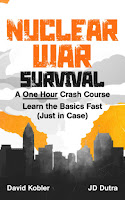
Nuclear War Survival Crash Course

Nuclear War Survival: A One Hour Crash Course by SouthernPrepper1. 
Quick, practical nuclear survival basics. Read it in an evening, sleep better forever.


Nuclear War Survival Skills

Nuclear War Survival Skills by Cresson H. Kearny (2022 edition). 
The government-commissioned Cold-War classic, still the gold standard for civil-defense DIY.


The Richest Man in Babylon by George S. Clason. 
New addition for 2025! Timeless parables that teach rock-solid personal finance principles: pay yourself first, live below your means, make your money work for you. Financial collapse is the most likely SHTF most people will ever face; this little book has kept more families solvent for a century.


Wrap one (or several) of these up this Christmas. You’ll be giving more than just a book, you’ll be giving knowledge that can protect and empower the people you care about for years to come.

Wednesday, November 26, 2025

Survival Gear Fail: Why Wire Saws Suck and Better Alternatives

By Cade Shadowlight

In the world of survival prep, compact tools can make or break your kit. The wire saw, often called a commando saw, seems like a no-brainer for bug-out bags or tiny survival tins like Altoids cans. It's lightweight, rolls up small, and promises to slice through branches effortlessly. I carried one for years without testing it (big mistake! always verify your gear before SHTF).

Inspired by a survival show, where the host's wire saw failed on the first pull, I decided to try mine. The rings held, but after cutting just two skinny pine branches (about 1/3 inch each), the wire kinked, twisted, and bent beyond repair. It couldn't even finish a third branch. Total junk. Into the trash it went.

But a portable saw is still essential for building shelters, gathering firewood, or processing game. So, I hunted for better options and found two winners.

1. Bahco Laplander Folding Saw (Amazon link)

This beast is too bulky for a tin kit but fits perfectly in a bug-out bag at under half a pound. I keep mine in my BOB but pull it out for homestead tasks (and always return it). 

My Laplander Folding Saw

I've used it to cut branches up to 3 inches thick with ease, and it could handle more with some elbow grease. Designed for wood, plastic, and bone, its bi-directional teeth cut on both push and pull strokes. It's one of my most versatile tools; I even bought a backup.


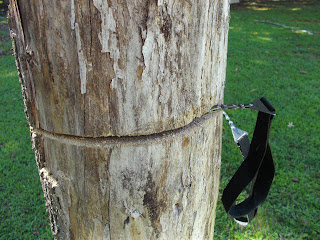
2. Survival Pocket Chain Saw (Amazon link)

This is a chainsaw blade with nylon hand straps, stored in a belt pouch. Again, not tin-sized, but lightweight (under half a pound) for bags, vehicles, or even EDC on your belt.

It delivers real power. I've felled small trees with it (see my photos below), though it's a serious workout. Great for building stamina, but wear gloves to avoid blisters!


 Key Takeaway: Field-test every piece of gear. What looks good on paper (or in ads) might flop in the field. Don't get caught unprepared.

--------------------

*** Liked this article? Never miss out on future articles by following Dystopian Survival


Tuesday, November 25, 2025

Preppers Need to Start Hiking in 2026 (Get Fit, Build Skills, Test Gear)

By Cade Shadowlight

If you’re serious about preparedness, hiking isn’t just a hobby. It’s essential survival training disguised as fun.

Hiking is outstanding physical conditioning, real-world gear testing, navigation practice, land-reading experience, and a low-stress way to push your limits while everything is still “normal.” When the grid goes down or society frays, the people who are comfortable covering miles on foot with a pack will have a massive advantage.

Whether your goal is peak fitness, rehearsing a bug-out route, mastering off-trail movement, or simply enjoying time with family away from screens, hiking delivers. Best of all: you can start today with almost zero cost or experience.

Never hiked a day in your life? No problem.

Begin with flat, well-marked trails in local parks or even your own neighborhood. Short daytime walks with a light daypack build confidence and expose weaknesses in footwear, socks, and load-carrying technique before you ever need them in earnest.

From there, graduate to:

  • Longer distances
  • Moderate elevation gain
  • Multi-hour or full-day hikes
  • Overnight backpacking trips
  • Off-trail and night navigation (when you’re ready)

Join a local hiking club or Meetup group. You’ll meet like-minded people who often overlap with the prepper community. The American Hiking Society (americanhiking.org) is another excellent resource for trail information, events, and advocacy.

Pro tip for preppers: Treat every hike like a mini field exercise.

  • Wear the boots and pack you’d grab in an emergency
  • Practice with your water filtration setup
  • Navigate sections using only map and compass
  • Identify edible/medicinal plants along the trail
  • Time how fast you can really move with a 25–35 lb load

The trail doesn’t care about your Instagram fitness influencer routine. It reveals the truth, and that truth is exactly what keeps you alive when things go sideways.

Make 2026 the year you stop talking about “getting in shape for the collapse” and actually do it, one mile at a time. See you on the trail.

Recommended Reading While You’re Out There

Peterson Field Guides – The gold standard for identifying birds, trees, mammals, reptiles, mushrooms, and edible & medicinal plants. Turn every hike into an intelligence-gathering mission. Knowledge weighs nothing and could save your life. Available on Amazon.

*** Liked this article? Never miss future survival and preparedness content by following Dystopian Survival now. Just click here to sign up for free.*** 


Sunday, November 23, 2025

The Surprising History of Victory Gardens

By Cade Shadowlight

There is a surprising history to Victory Gardens, with a couple of important lessons to be learned. Let me explain.
 
During World War I, the United States and Canada had to provide food not only for their populations, but for war-ravaged Europe as well. As more food stuffs were shipped overseas, availability of food in North America decreased and prices increased on such staples as milk, butter, eggs and coffee. Meatless and wheatless days were encouraged by government officials to try to cut consumption. Community gardens began to spring up everywhere as people started growing their own food.

In 1917, the National War Garden Commission was founded to "arouse the patriots of America to the importance of putting all idle land to work, to teach them how to do it, and to educate them to conserve by canning and drying all food that they could not use while fresh" (Charles Pack, The War Garden Victorious, copyright 1919, page10). The Commission used posters, slogans, cartoons, press releases and pamphlets to educate people.

After the end of World War I, the idea of victory gardens went out-of-style. But the idea made a comeback during the Great Depression with Depression Relief Gardens. Early during the Depression, these gardens were promoted by local governments and were a bureaucratic nightmare, with squabbles and infighting over where to put the gardens, what to grow and how much control individuals should have over their plots in the community gardens. By 1933, however, local governments had relinquished control of these community gardens to private organizations, such as the Family Welfare Society, which did a remarkably better job organizing them. 

After a few years of private s
uccess, the federal government eventually took control, changed the names from "relief gardens" to "welfare gardens" and greatly restricted eligibility for participation. By the end of the 1930s the Depression era gardening movement was dead.

Then came World War II, and the Victory Garden movement was back. But the Victory Movement was about more than just growing food, though the gardens did continue to be a big part. Conservation of resources was also promoted. Scrap metal drives were commonplace, as were rubber drives. Salvaged kitchen fat was collected and used to produce glycerin, which was used in the production of drugs and explosives. War bonds were sold. Societal norms were changed as women were encouraged to go to work in order to fill jobs left vacant by the men who went off to at war. Rosie the Riveter (poster on the left) became a symbol to rally around.

War time efforts of the common folks were promoted by posters, slogans, pamphlets, billboards, cartoons, comics, TV and films. Whatever it took to get the word out and promote gardening and conservation efforts was done. A massive change in people's behavior took place. It is estimated that by 1943, 40% of America's vegetables were grown in over twenty million victory gardens.

The year 1946, after the end of World War II, saw a sharp decline in gardens planted by average people. Home gardens eventually became little more than a hobby pursued by only a small percentage of Americans.

The Arab oil embargo, high inflation and economic problems in the 1970s resulted in a renewed interest in gardening. 1975 saw the creation of the television gardening show entitled The Victory Garden. During the economic boom of the 1980s, interest in home gardens once again waned. 

Lessons To Be Learned

This ebb and flow in interest in gardening and self-reliance depending on good times or bad times continues to this day. Interest increases during bad times as people struggle to survive, and learn they cannot depend on the "system" or even government to help them. Yet as soon as good times come around again, folks quickly forget those lessons and go back to dependence on the system and government. 

Another lesson to be learned is found in how poor a job government did in managing victory gardens, and how much better private organizations and individuals did when government turned it over to them. Self-reliance cannot be imposed or managed by government. In fact, government control is the opposite of self-reliance. 
 
-----------------------------------
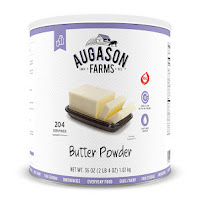
AD:  Augason Farms Long-Term Food Storage - This is where I get powdered butter, eggs, cheese, milk, and other long-term foods for my Survival Pantry. Shelf-life up to 20+ years. Good quality, good taste, good value. For my money (literally, since I am a paying customer), Augason Farms is the best long-term foods option.


Thursday, November 20, 2025

Survival Knives: A Discussion with 7 Recommendations

By Cade Shadowlight

What makes a survival knife?

Let's be clear on one thing: there is no official definition of a survival knife. It is possible for decent and knowledgeable people to have different opinions on the subject. Here is my personal definition of a survival knife.

Survival Knife: a good-quality, rugged, full-tang, fixed-blade knife that can be used for multiple purposes, including self-defense.

Good-quality means a well-made knife with a sharp, easy-to-maintain blade. This excludes the super-cheap $10 "survival" knives you sometimes find at places like Walmart. 

Rugged means a knife that is tough and sturdy, and will hold up to heavy use. For the purposes of a survival knife, this means full-tang and a thick blade. It also means a sharp, but not razor sharp, edge. Razor sharp edges are hard to maintain, and nick and fold too easily under heavy use (razor edges are best for detailed work, such as leather work).

Full-tang means the blade and handle are one piece, not separate pieces joined together in some way (welding, screws, rivets, etc.). Separate pieces joined together creates weak points in the knife, which is okay for some uses, but not the heavy use of a survival knife. 

Fixed blade means the knife does not fold-up like a pocket knife, but rather is permanently rigid. Typically, a fixed blade is carried in a sheath. 

Multiple purposes means that the knife's design allows for many different uses. All knives are meant for cutting, but there are many different ways knives can be used — cutting plants, cutting flesh (skinning), cutting other materials, chopping, making finely detailed cuts, fighting, throwing, and so forth. The intended purpose determine a knife's size, shape, materials, sharpness, and other design elements. A knife should be judged with its intended purpose in mind. No one knife is perfect for all situations. A survival knife is intended to help you survive in difficult circumstances, which means its uses may include anything from general camp activities to self-defense. A good survival knife won't do everything perfectly, but it will do many things well-enough. 

Self-defense is an important function of a survival knife. Hopefully, you will never need to defend yourself with a knife, but if you do, you are going to need a a few things from the knife. Size matters. Toughness of the blade matters. And it needs to have some good finger guards. Why? In a knife fight, you are likely to hit something hard (armor, bone, a buckle, whatever). The knife will come to a jarring halt. You want the knife's finger guards to prevent your fingers and hand from slipping forward causing you to slice open your own hand. If you do that, you will likely lose the fight. Which probably means you die. So, a good grip and finger guards are a necessity in a survival knife.  

What about straight-edge versus serrations? Many survival knifes come in two variations, straight-edge and serrated-edge (like is found on many steak knives). This is a matter of personal preference. 

What isn't needed in a survival knife? 

In my opinion, a useless gimmick is the hollow handle. They are advertised as a survival knife, and have hollow handles with a screw-on cap, often with a mini-compass on top. Inside the hollow handle are a few basic survival supplies like matches, fish hook and line, or band-aids. I think this hollow design weakens the knife, and creates potential problem spots. And the compass and survival supplies are usually cheap junk. Skip these.

Also not needed in a survival knife is a huge price tag. You can find survival knives with price tags for many hundreds of dollars. But you can find good-quality survival knives for around $100 or less. 

My Recommendations:

1) GERBER Prodigy Survival Knife - This is my main survival knife (I have the partially serrated edge version). I've used it for over 10 years. Very good quality, rugged and tough. It has a rubberized no-slip grip with finger guards. Tip of the handle is formed into a glass-breaker, which is a nice addition (wear gloves or wrap your hand and wrist in a shirt or jacket before using the glass breaker). On Amazon: https://amzn.to/3OOwCLS

2) KA-BAR US Marine Corps Fighting Knife - The classic warrior's knife, and possibly the most famous fixed-blade knife in the world. Bigger than the GERBER Prodigy, this knife has a leather-wrapped handle with metal finger guards. Technically it is a rat-tail tang (meaning full length but not full width) rather than a true full-tang, but this is a technicality in my opinion. On Amazon: https://amzn.to/4g5eqKa

3) Ontario Knife Company Air Force Survival Knife - I also have this knife and its one of my favorites. This is the U.S. Air Force and U.S. Army issued survival knife. Leather wrapped handle with blood grooves and metal finger guards. Like the KA-BAR, it is technically a rat-tail tang. The leather sheath comes with a pouch and sharpening stone. On Amazon: https://amzn.to/3OKjwQ3  Currently sold out on Amazon and at the manufacturer.  Beware poorly made knockoffs. Wait for the next run by OKC. 

Past Recommendations From My Readers:

4) Gerber Strongarm Knife (Amazon link)

5) Condor Bushlore Knife (Amazon link)

6) Morakniv Garberg Survival Knife (Amazon link

7) Glock Field Knife (Amazon link)
   
*** Liked this article? Never miss future survival and preparedness content by following Dystopian Survival now. Just click here to sign up for free.*** 

Wednesday, November 19, 2025

Childhood Cancer: Early Warning Signs Every Parent Must Know

By Cade Shadowlight

In a world where accidents remain the #1 killer of children under 15, cancer is a close second. The good news? When caught early, more than 80% of kids now beat it. The bad news? Early detection is hard, especially with toddlers and young children who can’t clearly tell you what hurts or feels wrong. 
 
Regular well-child checkups are non-negotiable. Yes, they cost time and money, and nobody enjoys them, but skipping them can be fatal. Doctors may catch things parents miss. 
 
Beyond checkups, you need to know the red flags. These symptoms can have innocent causes, but if they’re persistent, worsening, or have no obvious explanation, act fast. 
 
Major Warning Signs 
 
Get medical help immediately if your child has: 
  • Persistent or unexplained fever
  • Extreme fatigue, paleness, or weakness 
  • Lumps or swelling anywhere (especially neck, armpit, groin, abdomen)
  • Easy bruising or bleeding (nosebleeds, gums, unusual bruises)
  • Frequent or severe headaches, dizziness, or double vision
  • Ongoing bone/joint pain or limping
  • Unexplained weight loss or loss of appetite
  • Persistent nausea, vomiting, or stomach pain
  • Sudden changes in balance, walking, or coordination (stumbling, falling)
  • Unusual irritability, excessive crying, personality changes, or regression (bedwetting after being trained)
  • Excessive sleeping or inability to sleep
These aren’t “normal childhood things” when they keep happening without a clear reason (cold, growth spurt, etc.). 
 
What to Expect at the Doctor
 
The doctor will take a full history, do a thorough exam, and likely order blood work, X-rays, ultrasound, or other imaging. If a lump or tumor is found, a biopsy (removing a small piece for lab testing) may be needed. 
 
Speed matters. Delaying even a couple of weeks can change outcomes dramatically.Early detection isn’t just “helpful.” In childhood cancer, it’s often the difference between life and death.
 
Trust your gut. You know your child better than anyone. If something feels seriously off and keeps feeling off, push for answers. Demand tests. You’re not being paranoid, you’re being a parent.
 
Sources:
For more in-depth information and current treatment statistics, visit their sites directly.
 
Prepared parents protect their kids. Know the signs. Act fast.
 
*** Liked this article? Never miss future survival and preparedness content by following Dystopian Survival now. Just click here to sign up for free.*** 
 
_____________________
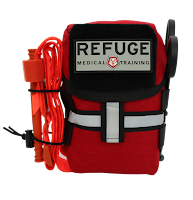
Refuge Medical & Refuge Training (Affiliate link) High Quality, American Made, First Aid Kits and Medical Supplies! (Training, too!).  A 10% Discount Code will automatically be applied at checkout using this link.